Influence of Secular Music on Christian Music
The Spirit and Soul of Music in
Christian Worship by Joshua Law
Introduction:
- Church Life Must Have an Emphasis on “Spirit and Mind”
For the highly spirited behaviors in the church, such as speaking in tongues, Paul requires an interpreter (so to be connected with the mind for understanding.) He advocates that the church’s worship life must involve both the spirit (Gk. pneuma) and the mind (Gk. nous).
1 Corinthians 14:15 “What is it then? I will pray with the spirit, and I will pray with the understanding also: I will sing with the spirit, and I will sing with the understanding also.”
For the present day, since English is an international language, the Bible has been translated into majority of languages, and mass communication media is extremely wide-spread and available, this spiritual gift seems to be much less in need. But the principle of prayer and singing that Paul talked about is, of course, the golden rule, because no matter what the medium may be, the audience’s understanding is the most important.
The highly emotional style of classical music of the Romantic Period has the same negative influence on worship as the soulful popular music in the modern church. (The devil is an expert in tempting humans into sin and leading them astray through emotions to defeat the human spirit and understanding of the truth). These two types of music have influenced the quirks of modern addiction to the romantic mood of music. This quirk for emotional feeling usher people to lose their ability for spiritual reasoning (spiritual wisdom) and turn to feelings as a guide to pursue truth. To many churches, worship means just to sing a random selection of love songs to Jesus. The congregation enjoys “spiritual pleasure” watching the worship leaders acting like super pop stars. Many classical music fans enjoy listening to classical music (especially music of the Romantic Period) as a form of worship, and many enjoy the ecstasy inspired by Christian pop rock (particularly the explicit and direct love song lyrics), thinking that it gives them a spiritual high. Therefore, music of the classical Romantic Period or our contemporary popular song lyrics used in churches mostly focus on love. The warm and fuzzy love emotion have misled our congregations into emotionalism instead of spiritualism. And, somehow, the many other ways/stanzas of worship such as confession, reconciliation, salvation, prayer, dedication, etc. are being left out and neglected.
- In the History of Western European Music, There Were Good Examples of Music in Worship
In fact, before the Romantic Period of Classical music in Western Europe, the music used by the churches were structured, substance filled, emphasizing the comprehension of the lyrics, and the enhancement function of music behind the lyrics, were suitable for the Christian church use. As to what to use, how to use, that will be individual subject matters for separate discussion. (Author’s note: Chinese music has been embedded in the language, unlike that of Western culture, which separates music from language. This topic could be discussed separately.)
Preparation for Studying This Topic:
The purpose of this article is to connect the music of the classical Romantic Period to modern pop music and the church music it profoundly influenced through Ragtime, Jazz, Blues and Pop. This is a process to examine, from the perspective of world music and theology, how Romanticism misled the development of church music away from Biblical principles of spirit and mind. Please be objective and use the attitude of “thinking outside of the box” to understand the analysis and discuss with each other for a better understanding of Biblical principles of worship and use of music.
The examples cited here can be found on Youtube, and the links are also listed in the article, please go to the video to listen to them.
- Christians must speak up!
Because the light of Christians cannot be ” hidden under the bushel”
Matthew 5:14-16
“Ye are the light of the world. A city that is set on an hill cannot be hid. Neither do men light a candle, and put it under a bushel, but on a candlestick; and it giveth light unto all that are in the house. Let your light so shine before men, that they may see your good works, and glorify your Father which is in heaven.”
“The necessary condition for the victory of evil is that good people do nothing” only (attributed wrongfully to) Edmund Burke.
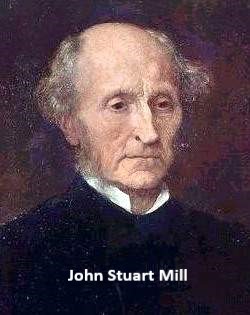
It was spoken by John Stuart Mill, the utilitarian philosopher. John Stuart Mill said in his inaugural speech as the president of St Andrews University in 1867:
“Let not anyone pacify his conscience by the delusion that he can do no harm if he takes no part, and forms no opinion. Bad men need nothing more to compass their ends, than that good men should look on and do nothing. He is not a good man who, without a protest, allows wrong to be committed in his name, and with the means which he helps to supply, because he will not trouble himself to use his mind on the subject.”
If we see danger, we must speak up, and we must act to rescue those in danger.
- Christians Need to Investigate Biblical Truth in Depth.
The Retaining Ability of the Mind, the Filling of the Holy Spirit.
John 8:32 “You will know the truth, and the truth will set you free.”
If your mind bucket (the bucket represents the human mind, and water often represents the Holy Spirit in the Bible.) has no leakage, you are blessed. Most people have holes in their mind. The information they heard, the text they read, and the things they learned and saw soon leaked away, nothing is left, everything leaked out.

The Holy Spirit in the hearts of Christians will not be leaked out, because the Holy Spirit will always be with them. (note: The Holy Spirit works closely with the mind through the Word of God.)
John 14:16,17 “And I will pray the Father, and he shall give you another Comforter, that he may abide with you forever;”
Christians must try to attain a deep understanding of the truth, and more importantly, they must practice the truth.
Psalm 119:11 “Thy word have I hid in mine heart, that I might not sin against thee.”
Psalm 1:1,2 “Blessed is the man that walketh not in the counsel of the ungodly, nor standeth in the way of sinners, nor sitteth in the seat of the scornful. But his delight is in the law of the LORD; and in his law doth he meditate day and night.”
Furthermore, the filling of the Holy Spirit fills up from within, and overflows to the full.
The external manifestation of the filling of the Holy Spirit is love, good deeds and testimony.
The light of Christians cannot be “hidden under the bushel”, so Christians must speak up!
The external manifestations of being Christians are joy, love, good deeds and testimony.
Gal 5:22 “But the fruit of the Spirit is love, joy, peace, longsuffering, gentleness, goodness, faith, Meekness, temperance: against such there is no law.”
Christians must live in accordance with the leadership of the Holy Spirit:
James 1:22-25 “But be ye doers of the word, and not hearers only, deceiving your own selves. For if any be a hearer of the word, and not a doer, he is like unto a man beholding his natural face in a glass: For he beholdeth himself, and goeth his way, and straightway forgetteth what manner of man he was. But whoso looketh into the perfect law of liberty, and continueth therein, he being not a forgetful hearer, but a doer of the work, this man shall be blessed in his deed.”
The evidence for being Christian is not only changes in internal thoughts, feelings, and will, but also changes in external attitudes, words, and behaviors.
- Christians Should be Determined to Think Out of the Box and Engage in Transformation Depending on the Spirit of God:


Luke 10:3 “behold, I send you forth as lambs among wolves.“
Christians are called to think out of the circle/box of society, church traditions, and the flesh. With the eyes of Christ, you can see the church and yourself from outside the church circle; with the eyes of Christ, you can also see the world and the society within the circle of the church, this way, you can distinguish between authenticity and falsehood.
James 2:17 “Even so faith, if it hath not works, is dead, being alone. Yea, a man may say, Thou hast faith, and I have works: shew me thy faith without thy works, and I will shew thee my faith by my works.”
But this ability to see beyond the box sometimes comes at a very high price.
Historical helplessness (Being Christians, we should learn to have absolute faith in God and absolute patience. Refer to the book of Habakkuk)
For this unique out-of-the-box vision and viewpoint, Caleb and Joshua have to pay the price of thirty-nine years to walk together with the Israelites. The result of voting after spying on Canaan was an extremely unfortunate event in Israeli history. Facing the same observation, they saw different things. Caleb and Joshua were still among the losers even though they had the right vision but were against the other spies that holds the majority of votes. But history proved that their vision was Godly, and it also pointed out to us that the opinions hold by the majority are not necessarily correct! Church leaders who face difference of opinion need not to excuse themselves in saying that they “have another calling, and need to follow God exclusively”, but need to do their best, despite opposition, teaching and guiding the congregation to find the will of God… But after doing their best, the result could still be unknown. This really makes you and I feel helpless!!!! We are not God!! We can’t see the way ahead … Therefore, we should follow God more modestly and tremblingly, leave the results to Him, walk with everyone in unity, and bring glory to God!! (by Daniel T Law)
- The Process of Christian Change:
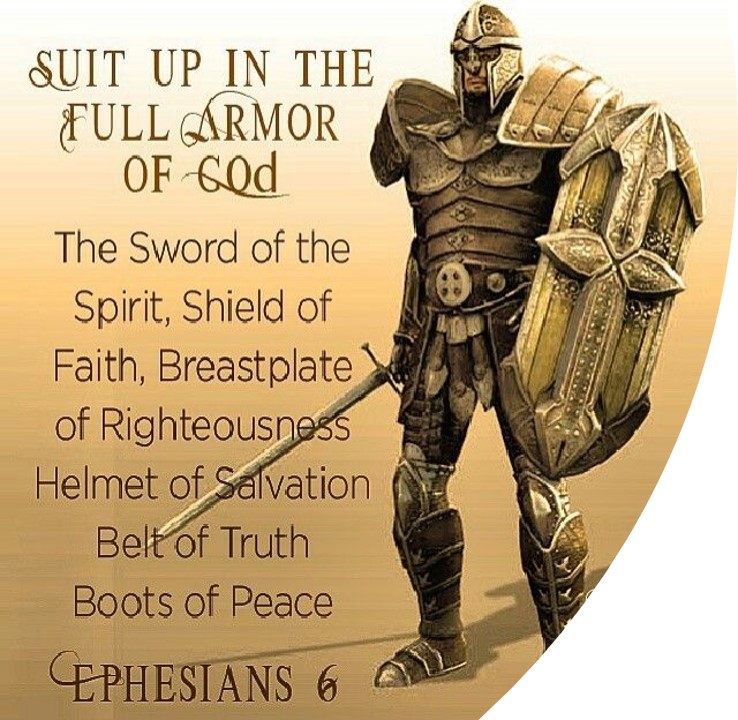
(Take off, put on, and move forward.)
Ephesians 4:22 “That ye put off concerning the former conversation the old man, which is corrupt according to the deceitful lusts “
Ephesians 4:24 “And that ye put on the new man, which after God is created in righteousness and true holiness.”
Ephesians 6:13 “Wherefore take unto you the whole armour of God, that ye may be able to withstand in the evil day, and having done all, to stand..”
The Salvation of the Spirit/Soul, the Transformation of the Human Heart:
The law of sin and putting on Christ, Christians live by scripts, which are rewritten and transformed by Biblical truth and the guidance of the Holy Spirit.
Romans 12:2 “And be not conformed to this world: but be ye transformed by the renewing of your mind, that ye may prove what is that good, and acceptable, and perfect, will of God.”
Steps of Christian Change: Spirit (pneuma, mind, nous), Soul (psuche), Will, and Behavior (manifest in the body)
Spirit:
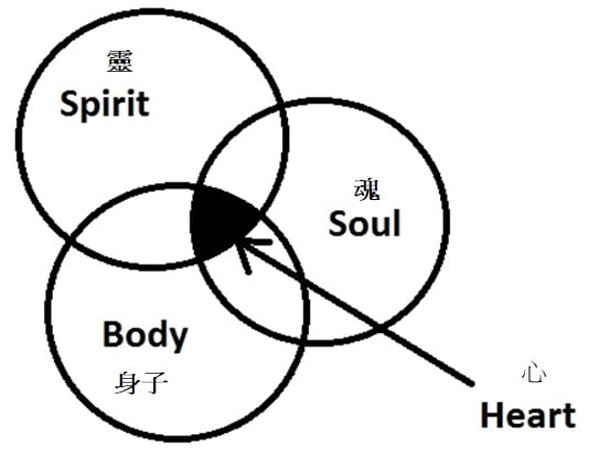
Spirit: (Pneuma), such as the spirit of God; 1 Corinthians 14:15 mentions correcting the spiritual behavior of the church speaking in tongues as the manifestation of the Spirit of God at that time. The Spirit of God speaks to our understanding (Mind):
Psalm 1:2,3 “But his delight is in the law of the LORD; and in his law doth he meditate day and night. And he shall be like a tree planted by the rivers of water, that bringeth forth his fruit in his season; his leaf also shall not wither; and whatsoever he doeth shall prosper.”
Mind:
Mind: (Mind: Nous), where thoughts are processed. “Meditate day and night” the Word of God (Bible).
Soul:
Soul: (Psuche), where the feelings and will are; the person with personality; the breath of human life. When God created Adam, He breathed (psuche) into his nostrils, and Adam became a living Soul.
Body:
Body: (Soma) Body, flesh and blood, body functions interact with emotions (soul) and thoughts (mind).
According to the original Greek word “repent – metanoieo”, repentance is change of mind, which means that a person’s repentance is a change of mind toward God, people, the world, and oneself. There is a positive change, in perceiving the Truth, accepting salvation and resolving to believe in the Lord. Because of the determination to believe in the Lord, repentance, confession happen and the experience of forgiveness, will result in a mood of joy, the indwelling still voice of the Holy Spirit begin reminding, the behavior of believers will gradually change and become like Christ. Therefore, the changing process of our justification by faith starts with the change of mind and proceeds with new thinking, new emotion, change of will, and action. In our church activities, (gathering of believers) sharing/fellowship and song lyrics should emphasize the rich mindful (Word) content, full of spirit (pneuma) and understanding (nous). Of course, since the will is part of the soul, there are certain benefits to responding with the appropriate emotions.
Main Theme:
- Pure Music is a Product of the Soul:
(With very little spirituality and understanding)
Romantic Music Has Great Power to Control the Emotions:
Liszt: Hungarian Rhapsody #2
Cologne New Philharmonic Orchestra directed by Vollker Hartung
When listening to this rhapsody, you can’t help but feel unrestrained feelings, and your brain produces ecstasy. This is the immense power of Romantic music to control emotions!
2. The Spirit of the Song is in the Lyrics
Sample: “Come Thou fount of every blessing,” – Mormon Tabernacle Choir
In this example, all members of the chorus wear the same uniform, so it does not distract the congregation. All attention can be focused on the interpretation of the lyrics. None of the chorus members has a prominent voice that sticks out. The music is soft and blending so you can pay attention to the content of the lyrics. This shows that there is integrity between the lyrics and the song style. It is a good model of beautiful worship chorus.
Although the poetic lyrics and the hymn format of this song is older, the theological content in the lyrics are very rich. The lyrics, singers, and harmony are all blending, so the congregation can feel the revelation of the Spirit of God despite being sung by a Mormon choir. The form and structure of music can be rewritten, but the content of the lyrics and the richness of theology must be preserved. You can also keep the content and modernize the lyrics and music style if you need to reach out to the younger generation.
Lyrics:
Come Thou fount of every blessing Tune my heart to sing Thy grace
Streams of mercy never ceasing Call for songs of loudest praise
Teach me some melodious sonnet Sung by flaming tongues above
Praise the mount, I’m fixed upon it Mount of Thy redeeming love
Here I raise my Ebenezer Here by Thy great help I’ve come
And I hope by Thy good pleasure Safely to arrive at home
Jesus sought me when a stranger Wandering from the fold of God
He to rescue me from danger Interposed His precious blood (Precious blood)
Oh, that day when freed from sinning I shall see Thy lovely face
Clothed then in blood washed linen How I’ll sing Thy sovereign grace
Come my Lord, no longer tarry Take my ransomed soul away
Send Thine angels now to carry Me to realms of endless days
Oh, to grace how great a debtor Daily I’m constrained to be
Let Thy goodness like a fetter Bind my wandering heart to Thee
Prone to wander, Lord I feel it Prone to leave the God I love
Here’s my heart, oh take and seal it Seal it for Thy courts above
Here’s my heart Oh take and seal it Seal it for Thy courts above
- In the history of music, there are formal structures suitable for the Christian church, but there are also formal structures that are contrary to the principles of the Biblical worship.
The following is a list of historical musical periods and their musical characteristics, samples of which are evaluated one by one.
Examples in Orthodox Art Music: (Classical Music)
Musical features of the Middle Ages, Renaissance, Baroque, Classical, and Romantic periods
- Middle Ages:
Medieval music includes the sacred and secular music of Western Europe in the Middle Ages, from approximately the 6th century to the 15th century. This is the first and longest major era of Western classical music, followed by Renaissance music; these two eras constitute what musicologists usually call Early Music. According to the traditions of the Middle Ages, medieval music can be divided into early (500-1150), high-period (1000-1300) and late (1300-1400) medieval music.
In the Middle Ages, the foundation of musical notation and music theory practice was laid, these practices shaped Western music into norms developed during the period of common practice, including
Baroque era (1600-1750), Classical era (1750-1820) and The Romantic era (1800-1910).
The most important of these is the development of a comprehensive musical notation system that enables composers to write their song melody and instrumental works on parchment or paper.
Gregorian Chant:
The definition of Gregorian chant:
The monotonous and rhythmic free worship chants of the Roman Catholic Church
Pope Gregory I’s chanting is a central tradition in the Western Plains, a monophonic, a cappella sacred song in the Latin (sometimes Greek) of the Roman Catholic Church. Gregorian chants were mainly developed in Western and Central Europe in the 9th and 10th centuries. They were later supplemented and deleted. Although popular legends believe that Pope Gregory I invented Gregorian chants, scholars believe that it originated from the later synthesis of Carolingian Roman hymns and Gaul Chants. The monotonic chanting is produced when the church has a lot of echoes (used as amplification) and the need to sing worship scriptures/texts to the whole congregation.
The chanting is mainly based on the accents of the lyrics, with very few tonal activities, and is carried out in the form of a cappella without accompaniment. It is suitable for biblical principles, but it does not appeal to today’s churches’ musical appetite.
B. Renaissance Period: (The gradual process of Western European music development is listed in order using green alphabets a.b.c.d. in this article)
a. Exploring chords:
Chorus works from the Renaissance and Baroque periods
Renaissance is a term used to describe the transitional period from the Middle Ages to the modern in European history, covering the 15th and 16th centuries. It occurred after the crisis in the late Middle Ages (Dark Ages) and was related to a huge social change.
Mainly based on the lyrics, with a little more tune activity, in a cappella form, which is suitable for biblical principle. It is difficult to use for the contemporary church because few people can sing in tune. (result of the negative influence of modern media). But the author thinks it should be adopted. These choruses are very pleasing to the ears. They can be combined with Biblically sound lyrics composed in the preferred style of easy melodies. Just remember, good chorus sound attracts good singers.
b. Exploration of Counter Melody:
The main characteristics of Renaissance music are as follows: music based on patterns. Four or more parts have a richer texture. Mix rather than contrast in the texture of the music. Pay more attention to the flow and progression of chords. Beautiful melodic lines crossing each other.
C. Baroque Period:
c. Experiments on contrast, volume, (hall resonance) and musical form:
Baroque music is a period or style of Western classical music composed between 1600 and 1750. This era immediately followed the Renaissance music era, followed by the classical era, and the magnificent style marked the transition between the Baroque and the classical era. Baroque: c. 1580–1750 Classical: c. 1750–1820
Bach Chorale Motet BWV 227
d. Experimentation of Equal Temperament
J. S. Bach
The characteristics of Baroque music are:
e. Long and smooth melody lines often use decorations (decorative notes, such as vibrato and turning)
f. Loud and soft,
g. Comparison of solo and ensemble
h. Two or more melody lines are combined together in counterpoint texture stepped dynamics –
i. The volume changes suddenly, which sometimes produces an echo effect,
j. In the Baroque era, the almost universally used double bass, (basso continuo) provided the bass line and chord foundation through the double bass to provide the harmonic structure of music.
This kind of vocal chorus is very suitable for our modern church use. The music does not overpower the chorus sound, and the lyrics can fully show the content of spirit and understanding. We should adopt Bach Cantata Chorale, 4-part hymn style for our church use. Church music leaders can write on the theme of each worship stanza according to the choir singing ability. This type of Cantata Chorale allows the lyrics and music to reach the goal of each worship stanza. There are countless hymns in the church that can be rewritten, making it easier and suitable for choirs.
D. Classical Period:
Sample: Best of Haydn
Design, Tonality, and Structure,
Haydn https://youtu.be/EmZF3kBZQ6E
The classical period is an era of classical music, approximately between 1730 and 1820.
The classical period is between the Baroque period and the romantic period.
k. Classical music is lighter, clearer, and less complicated than Baroque music. It is mainly homophonic, using clear melodic lines on the subordinate chord accompaniment, but the counterpoint has not been forgotten, especially in the latter part of this period.
l. It also uses a style that emphasizes lightness and elegance (galant) instead of the dignity and impressive grandeur of the Baroque style. Galant: A light and elegant free homophonic style of musical composition in the 18th century with rococo ornamentation as contrasted with the serious fugal style of the baroque era.
m. The diversity and contrast in music have become more obvious than before, and the size, scope and strength of the orchestra are increasing.
Mozart
Design, Tonality, and Structure.
The Harpsichord was replaced by the Fortepiano as the main keyboard instrument. Unlike the harpsichord, which uses bird quill to pluck the strings when the keys are pressed, the piano will strike the strings with a leather-wrapped hammer, which allows the player to play louder or softer (hence the original name “fortepiano” , Literally means “loud and soft”) and play more expressively; in contrast, the strength of the harpsichord keys played by the player does not change the sound dynamics. Composers in the classical period believed that instrumental music was very important. At the end of Mozart’s life, he played Fortepiano, which gave him the dynamics he wanted.
E. Romantic period:
n. The music of the romantic period is full of romantic feelings and has a huge influence on modern music
o. Western classical music has reached the “Romantic” period, the lyrics content is not promoted.
German romanticist theory master Wilhelm Heinrich Wackenroder (13 July 1773 – 13 February 1798) declared that written language is something outside of the body, and music is more cordial: “In the depths of the human heart, emotions are like waves surging and fluctuating, hardly could be expressed in words. Writing is nothing more than embedding emotions in foreign objects; music moves in the heart and flows outward. It is spontaneous and does not need other people’s understanding.” Since then, Western classical music has moved towards centering on musical sentiment. (Soul – psuche) Lyrics, rationality and morality were all kicked out. It’s no wonder that after listening to a perfect romantic song, people often feel the tunes and music “stays around the ceiling beams for three days”, 「繞樑三日」but most people has no idea what the lyric says.
“und ebenso ist es mit dem geheimnisvollen Strome in den Tiefen des menschlichen Gemütes beschaffen, die Sprache zählt und nennt und beschreibt seine Verwandlungen, in fremden Stoff;die Tonkunst strömt ihn uns selber vor” ― W. H. Wackenroder, Herzensergiessungen eines kunstliebenden Klost-erbruders, ed. A Gillies, 148
Beethoven
Give up thinking, mind, reason, rules, and focus on emotions, -Beethoven
“If Music be the food of love, play on”-William Shakespeare
Romantic music is a stylistic movement in Western classical music, which is related to the period of the 19th century, which is usually referred to as the romantic era (or romantic period). It is closely related to the broader concept of romanticism—the intellectual, artistic, and literary movements that were popular in Europe from approximately 1800 to 1910.
Rachmaninov
Abandoning Thoughts, Mind, Reason, Rules, and focus on Emotions
Rachmaninov.
Romantic composers seek to create
p. Individualistic, emotional, dramatic and programmatic music.
q. Reflects broader trends in romantic literature, poetry, art, and philosophical movements. Romantic music is usually inspired by (or trying to evoke) non-musical stimuli on the surface, such as nature, literature, poetry, or fine art.
Tchaikovsky
Conradin Kreutzer (1780-1849)-Te Deum D-Dur, KWV 3301
Csardas-Gypsy Dance; the innocence of music
Csárdás is often referred to as Czárdás, a traditional Hungarian folk dance whose name comes from csárda (roadside tavern and tavern in Hungary). It originated in Hungary and became popular among Hungary and neighboring Slovenia, Burgenland, Croatia, Transylvania, Slovakia and Moravia, and Banat Bulgarians including Bulgaria.
Carmen Fantasy, Op. 25, Pablo de Sarasate-Chloe Chua
Abandoning Thoughts, Mind, Reason, Rules, and focus on Emotions
This little girl’s spirit, soul, and body have not yet grown. Yet listening to her violin sound, she knows that her soul is already a growing young woman. Please see that her face (body) has not yet able to express emotions!
Saint-Saens Introduction and Rondo Capriccioso-Christian Li (11 yrs. old)
Abandoning Thoughts, Mind, Reason, Rules, and focus on Emotions
Christian Li’s spirit, soul, and body have grown up much more mature than his age. Listening to his interpretation, you know that his soul has matured, and his face (body) has deeper emotional expression!
Pablo de Sarasate GPS Tunes 1878 Violin: Teo Gertler
Teo Gertler is a step further than Christian Li, looking at his face (body) more emotion is shown!
Playing Classical music of the Romantic Era will make a child’s soul grow quickly!
Yuja Wang’s Emotions
Rachmaninov Prelude in G Minor, Op. 23, No. 5
Yuja started playing at the age of 4. Let’s look at her facial expressions. You will see pain. It’s almost like being traumatized. Her dress is a bit liberal and expresses feminine beauty. In fact, her piano interpretation has already fully revealed her soul, without the assistance of the body. Her clothing could be more modest.
Valentina Lisitsa plays Liszts Hungarian Rhapsody No. 2
Valentina Lisitsa does not need any revealing clothing to enhance her romantic soul.
The main features of Romantic Music include:
1. Emotional expression- this becomes more important than formal structural considerations, because composers oppose the formal restrictions of the Classical Period.
2. The size of the orchestra and the variety of instruments have increased significantly.
3. New structure/form- Rhapsody, Nocturne, Song Cycles
4. More and more refined harmonic progression
5. Longer melody than Classical Period
6. Larger dynamic range
7. Larger pitch range (can be easily expressed on the piano).
8. Nationalism in music… some composers try to celebrate their country with their work, such as Sibelius’ Finlandia.
Read this:
During the Romantic period in “classical music”, there was a powerful music movement away from Christianity. It was generally called “secularization” of church music. Instrumental music (pure music w/o lyrics, which is pure emotion) took the main stage. This suggested that emotionalism is not a good thing. Satan is expert in ushering man into “emotional decisions” called emotional reasoning, if it feels good, it can’t be wrong. Now, “syncopation”, which is the main characteristics of modern pop music, is described as the accent being played ahead of time, usually on an light (up) beat, playing lauder than the down beat, just like “pre-marrital sex” & pregnancy before marriage, which is now accepted as normal. Don’t take me wrong, I enjoy the pure emotion in music, but I don’t believe that Christian music should only dwell in the emotions.
Romantic Music Produced Modern Pop Music:
Music in the romantic period is overflow with romantic feelings, and has a huge influence on modern music…..
But Are Being Abused:
パイレーツ・オブ・カリビアン 彼こそが海贼
Pirates of the Caribbean movie episode “He is a pirate”
He’s a Pirate from “Pirates of the Caribbean” [ピアノ]
This Japanese pianist’s clothes are a bit too revealing, and she uses her feminine attraction to make up for her lack of piano skills. This is a bad by-product of romantic music. If she plays baroque piano music, this attire would be counterproductive.
Lola Astanova
Lola Astanova’s attire simply went overboard.
Chopin Funeral Prelude in E minor Op.28 No.4 쇼팽 프렐류드 질식
The prelude to Chopin’s funeral is a very easy to play, but the “drunkard’s intention is not to drink,” (醉翁之意不在酒) and the striptease attire is appearing to lower instincts to win fans!
Read this: (in red)
During the classical romantic period, musicians and composers started to give up rationality, and thoughtful content, but instead, focused solely on emotional expressions. In the second half of the nineteenth century, due to lack of direction for further development in classical music, it was kidnapped by the culture of the premodern period and transformed into the most popular form of musical, soulful indulgence.
At this time, due to the increasing importance of music, music schools conducted various large-scale experiments on music, resulting in the development of a new genre-Ragtime. e.g. Maple Leaf Rag
F. Ragtime:
Ragtime is a propulsive syncopated musical style, also one forerunner of jazz, the predominant style of American popular music from about 1899 to 1917. Ragtime evolved in the playing of honky-tonk pianists along the Mississippi and Missouri rivers in the last decades of the 19th century.
Thoughtful question:
The syncopated musical style has been called the devil’s pushing hand. Do you agree?
Maple Leaf Rag
Ragtime found its characteristic expression in piano works of formal structure. The frequently accented left-hand beat, at 4/4 or 2/4 time, was opposed by the fast, jumping syncopated melody in the right hand, which gave the music a strong forward momentum.
e.g. The Entertainer
Scott Joplin, known as the King of Ragtime, published the most successful early Ragtime “The Maple Leaf Rag” in 1899. Scott Joplin believes that Ragtime is a permanent and serious branch of classical music, creating hundreds of short films, a set of etudes, and the style of opera.
Other important performers are Louis Chauvin and Thomas M. Turpin in St. Louis (the father of St. Louis Ragtime), and in New Orleans, Tony Jackson. Although Ragtime’s heyday was relatively short, this kind of music influenced the later development of Jazz. Ragtime has occasionally experienced a revival, most notably in the 1970s. During this decade, pianist Joshua Rifkin released the critically acclaimed album Scott Joplin: Piano Ragtime (1970), and Marvin Hamlisch adapted Joplin’s music into the soundtrack of the popular movie The Sting (1973). Hamlisch’s work won an Oscar, and his Joplin version of “The Entertainer” won a Grammy Award and is a hit song.
Although Ragtime’s heyday was relatively short, this kind of music influenced the later development of Jazz. Ragtime has occasionally experienced a revival, most notably in the 1970s. During this decade, pianist Joshua Rifkin released the critically acclaimed album Scott Joplin: Piano Ragtime (1970), and Marvin Hamlisch put Jop Lin Joplin’s music was adapted into the soundtrack of the popular movie The Sting (1973). Hamlisch’s work won an Oscar, and his Joplin version of “The Entertainer” won a Grammy Award and is a hit.
And Marvin Hamlisch adapted Joplin’s music into the soundtrack of the popular movie The Sting (1973). Hamlisch’s work won an Oscar, and his Joplin version of “The Entertainer” won a Grammy Award and is a hit.
The Sting (1973)
G. Jazz:
Jazz is a genre that originated in some communities in New Orleans, USA. It originated at the end of the 19th century and the beginning of the 20th century, developed from Blues and Ragtime.
Jazz is a genre that originated in some communities of New Orleans, United States. It originated in the late 19th and early 20th centuries, and developed from blues and ragtime.
Jazz sample: It Don’t Mean a Thing by Lionel Hampton
Jazz is regarded by many as “American classical music”. Since the jazz era in the 1920s, jazz has become the recognized main form of musical expression. Then it appeared in the form of independent traditional and pop music styles, all of which were linked by the common bond and performance orientation of African-American and European-American musical ancestry.
For example:
1. Frank Sinatra — ‘Fly Me To The Moon’
2. Duke Ellington & His Famous Orchestra — ‘Mood Indigo’
3. Dave Brubeck Quartet — ‘Take Five’
4. Stan Getz and Joao Gilberto- ‘The girl from Ipanema’
5. Mike Davis- ‘So What’
H. Blues
Jazz experiments have led to the blues being used more and more as a genre rather than its original form. Blues is a music genre and a form of music. It originated from African Americans in the 1870s. Its roots lie in the African music tradition, the work songs and spirit of African Americans.
The blues form is a form of loop music in which the repetition of chords reflects common call and response schemes in African and African American music. In the first few decades of the 20th century, blues music was not clearly defined in terms of specific chord progressions. With the popularity of early performers such as Bessie Smith, the use of twelve-bar blues spread throughout the music industry in the 1920s and 1930s. The types of blues are 8-bar, 12-bar and 16-bar blues. The 12-bar blues is the most popular type, and the bar is the number of bars in each chorus. Due to the influence of Latin America in this particular region, blues are particularly developed in the Mississippi Delta region of the United States. Blues is a key component of jazz and rock music genres, and a wide range of blues styles are developed in the region.
The influence of jazz on modern popular music is sometimes overlooked:
Although this deep and rich history of American music is sometimes misunderstood, many genres have deliberately (or unintentionally) borrowed from it. The impact is so great that it is only a matter of time before we finally enter the world of jazz when we trace the influence of our favorite artist.
- Modern Pop Music
Popular music is usually performed in the form of songs by artists such as the Beatles and the Rolling Stones. “Pop music” competes with beat music in terms of the Beatles, originally nick named (beatless,) but in the United States, its coverage overlaps with “rock music” (it still is)
The characteristics of popular music include attracting general audiences rather than specific subcultures or ideologies and emphasizing crafts rather than formal “art” products. Three identifying characteristics of popular music:
1. Light entertainment, 2. Commercial requirements, and 3. Personal identity.
Popular music stems from a tradition of relaxing and entertaining listening. (Easy listening pleasure) Pop music seeks to provide the satisfaction of personal desires and emotions in order to achieve, (for those who are particularly attractive to young listeners,) cliché personality, stereotypes impressions and melodrama instant satisfaction psychology. In fact, the main purpose of this is about how popular music can generate revenue for record companies.
Harmony and chord progression in popular music are usually simple-minded. The clichés include barbershop quartet-style harmonies (i.e. ii – V – I) and blues scale-influenced harmonies.
Bing Crosby was one of the first artists to be called the “King of Pop Music.” In the 1940s, improved microphone design allowed for a more intimate singing style, and ten or twenty years later, cheap and more durable 45-rpm records for singles “completely changed the way popular music is spread,” which helped promoted popular music to the “Record/Broadcast/Movie Star System”. Another technological change was the widespread use of television and television performances in the 1950s, which forced “pop stars to have a visual (television) presence.” In the 1960s, the advent of cheap portable transistor radios meant that teenagers could listen to music outside the home. By the early 1980s, the promotion of popular music was greatly influenced by the rise of music television channels such as MTV, which “preferred artists with strong visual appeal such as Michael Jackson and Madonna”.
Multitrack recording (since the 1960s) and digital sampling, also since the 1980s have also been used as methods of composing and producing popular music. In the mid-1960s, popular music repeatedly experimented with new sounds, styles, and techniques, stimulating public discussion among listeners.
In the 1960s, most mainstream popular music fell into two categories:
1. Guitar, drum and bass band (Combo) or
2. A singer supported by a traditional orchestra.
Michael Jackson and Madonna have been called the “King and Queen of Pop Music” since the 1980s.
J. Modern Church Pop Music
Read this:
In order to adapt to the times, Christianity often abandons the principles of biblical truth because it does not understand the inside story of music and the principles of music in the Bible. This is equivalent to “引狼入室” letting a wolf into the room. (Asking a wolf to keep the hen house.)
Amy Grant, a Grammy award Christian singer turned secular, left the faith at her ripened age, here are 2 songs she was famous for:
“El-Shaddai”: https://youtu.be/8txqw-u4V78
“Thy Word”: https://youtu.be/9u_NMSH3hR8
What are the benefits of Christian pop singers to the church? How is it different from star Christian pastors? How about admiring, following, being a fan of the pastor? Some Christians worship Christian singers. What are the benefits of these superstardom? Churches only choose good looking worship singers and famous worship songs without examining the verbal content. What are the benefits?
K. Analyzing a Christopop
“True Repentance”
Lord, you have redeemed us, gathered us to go to war for you,
Lord, we seek with one heart, your kingdom and your righteousness,
Please forgive us for offending you,
From today on we will obey your will.
Lord, we truly repent and return to you,
Please forgive our sins and cleanse our hearts,
Lord, once again grants us grace, once again grant us mercy,
Please shape our lives, I pledge to live for you, and please you throughout our lives.
“True Repentance” analysis, and recommendations:
1. Theme: 1. War, kingdom, justice. 2. Forgiveness, obedience, repentance, conversion, molding, mercy. (Two contrasting topics)
2. Range: C4 to C5 (suitable for popular singing)
3. Singing voice: Gentle, passive, affectionate and silent, forgiving, obeying, repenting, turning back
4. Melodic activity: wide (not suitable for the public to sing along)
5. Style: love song, lack of war, kingdom, justice style
6. Interpretation: The same all through: weak beauty
7. Composition style: Young and peaceful, steady, mournful (no variation)
8. Composer suggestion: Change the first two sentences to have the momentum of war, kingdom, and justice. The singing should be more flexible, and the third line should transition to the singing of repentance and pledge mentality.
Note from the author:
1. The lyrics of this song are only about remorse, without mentioning the content of forgiveness and plans for change. (the lyrics in the Cantonese version are better) Engrain the offense committed in the spirit (thought), which can prevent the impulse to commit again.
2. This tune, singing and accompaniment are in the style of love songs, which has great market value. Many people like this kind of songs and singing. The singer is affectionate and cute; the audience will find it easy to fall in love with the singing; BUT with the lyric content:
“Redeemed us”, (the reality of the bloody cross) the voice is not serious enough
“Gather us to war for you,” (the destruction of war, the murder, the cruelty) voice needs to be dramatic
“Please shape our lives” is a very serious request for transformation. This transformation can only start from thinking, emotion, and will. Rarely starts with sensual love,
“blood”, “Kingdom”, “righteousness”, “Reformation” are very serious emotions and the singer’s voice does not match the content in the lyrics.
L. Chinese Pop Singers:
Wang Leehom is a genius, he is handsome and highly skilled, has everything, but let he his emotions to control him.
Wang Leehom is a global world superstar. Is he really? He wants to change the world.
What impact does he have on the world?
“Music tremendously influenced the emotion.”
Leehom Wang’s testimony is very superficial and in his “testimony, he does not mention Christ, salvation, and repentance:
The world class superstar Wang Leehom’s testimony, what contribution does it have to the world in knowing the truth (Jesus)?
He is but just another average celebrity personality.
M. In the Ministry:
Thoughtful question:
Loving music, loving music ministry, loving reputation, status, money, using music to assist in ministry and Paul’s motivation for evangelism:
Corinthians 9:16 “For though I preach the gospel, I have nothing to glory of: for necessity is laid upon me; yea, woe is unto me, if I preach not the gospel!”
are very different motivation, attitude, and obviously different effects.
N. Christian Worship Must Not Follow the Trend of Society
At the Cross-Hillsong Worship
The Stream of Praise “Heaven Worship LIVE” Season 3-EP17
The Most Beloved Lord/When You Walk Into Us/The Holy Spirit Comes Graceful Rain/We Exalt the Name of Jesus
Tianyun (天韻) Chorus Official MV
Why is Tianyun’s singing style more suitable under the principles of Christian music (spirituality and understanding requirements)?
The most important thing is that all aspects of the song from composition, style, singing voice, should support the lyrics which also should present a balanced theological content.
Today’s classical music of the Romantic Period, popular music, and even church music are full of affection and love, but what the much needed Spirit (Pseuma) and Mind (Nous) content are extremely lacking. (I Corinthians 14:15) As Christians we must not only dwell on love (romantic love) in our songs, but maintain a balanced of Spirit and mind in all our music.
If you have any preference for the above-mentioned music, you may be uncomfortable with my analysis. Maybe you haven’t step out of your circle/box in reading this article. This is unavoidable. As I said, Christian music must be far apart from sinful with worldly desires. We should use spiritual music instead of romantic music.
2 Corinthians 5:13 “For whether we be beside ourselves, it is to God: or whether we be sober, it is for your cause.”
The mind/spirit content of music is in the lyrics is a Biblical command. [Spirit (Pneuma) and Mind (Nous English = Muse/music)] Therefore, Christian songs must first start from theologically sound lyrics, with a melody and harmony that matches the lyrics in style, and there must also be a balance in truth content in all the lyrics of the songs selected each year. We must not follow secular trends, which are extremely, overwhelmingly full of sensual love. Because worship is the behavior of the congregation, therefore the melody, range, and structure of the song must be suitable for the congregation to sing in unison.
We should refer to the music of the Middle Ages, Renaissance, Baroque, and Classical periods, and need to refer also to the functional purpose (make peace) of traditional Chinese court music, for our worship music. We should use the truth content of the lyrics and the structure of the music to engage in church music in order to promote praise, submission, confession, reconciliation, illumination, Word of God and prayer.
Confucian Sacrifice to Heaven-
Yayue 雅樂 :(Elegant Music)
《竹書紀年》載:“有虞氏舜作《大韶》之樂”。 《呂氏春秋·古樂篇》同載:“帝舜乃命質修《九韶》、《六列》、《六英》以明帝德。”由此可知,舜作《韶》主要是用以歌頌示範為帝的德行。此後,夏、商、週三代帝王均把《韶》作為國家大典用樂。周武王定天下,封賞功臣,姜太公以首功封營丘建齊國,《韶》傳入齊。
孔子聞韶樂「三月不知肉味」,「樂者,通倫理者也。……是故先王之制禮樂也,非以極口腹耳目之欲也,將以教民平好惡,而返人道之正也」。也就是說,好的音樂能提升人的道德標準。孔子稱讚韶樂是「盡美矣,又盡善也」,以致聞之「三月不知肉味」。
Confucius’ Elegant Music (Court Music) policy demands that music must start with the poetry and creed the purpose of which is to promote peace reconciliation among the States, Societies, Families and Friends. The functional use of music is far from being an entertainment but rather an instrument for peace and morality.
Yinyue淫樂:(Licentious Music)
《樂記–魏文侯》舉了鄭國、宋國、衛國、齊國不同特點的音樂對人意志和性格的影響的例子:“鄭音好濫淫志,宋音燕女溺志,衛音趨數煩志,齊音敖辟喬志,此四者,皆淫於色而害於德,是以祭祀弗用也。“意思是鄭國的音樂很通俗簡易,使人意志放縱;宋國的音樂很嫵媚聲色,使人意志消沉;衛國的音樂很急促吵雜,使人的意志煩亂;齊國的音樂很古怪冷僻,使人意志傲慢。這四種音樂都有害人心,所以正式場合不能用。
Licentious music promotes indulgence; depression; arrogance; and upsets people’s good will. This music is harmful, so it cannot be used in formal court procedures and occasions.
4. Conclusion:
Two centuries ago, the American church experienced a revival, sending countless missionaries to all over the world, and the gospel reached the whole world. The hymns and short songs used at that time were very rich in the scriptures. The tonal structure, range and harmony were simple and pleasant, and easy to catch. Everyone could hear the sweet hymns and choruses from church singing resounded throughout the neighborhoods.
Our modern church has abandoned hymns, because the hymns’ tonal structure and form are out of fashion, and the range and style is not suitable for the congregation to sing. Although the lyrics are rich and correct and conform to the principles of the Biblical worship, they were all given up, like throwing the baby with bath water together. Going with modern music trends, which is like water flowing downward, most of our contemporary Christian songs are self-centered, (instead of God centered) promoting star worship. God’s love is often indistinguishable from human love. Worship songs often indulged in human love, even songs addressing love to God are in line with how love feels and rarely praising God for who He is. Biblical words, proclaiming salvation, confession, repentance, reconciliation and the subject of intercession are often absent from the contemporary worship songs. To people of this persuasion, feeling good means it is good. You don’t need your brain, just rely on your good feelings. Singing a love song to God is sufficient for worshiping God. For example, the Debbie Boone sang “You Light Up My Life” concludes with “It can’t be wrong, when it feels so right”.
Pure music can change the feelings of listeners and performers, but without lyrics, they cannot change anyone’s thoughts, will and behavior. (Repentance in the Bible uses “metanoieo” – meaning change of mind) For the work of the church, we cannot just feed people’s emotions, because emotions are temporary. If we want to stop entertaining the congregation and want to change people’s minds, wills, and behaviors, we must use biblical truths and persuasive lyrics. In doing so, we must be very careful in choosing lyrics that will change ideas, will, and behavior. We must choose accompaniment music that can support, assist, and enhance the content of the lyrics. Therefore, music that helps, cooperates, and enhances the thoughtful truthful content of the lyrics will determine our musical style.
The current congregational songs used in church worship is mostly modeled after pop music or art music, focusing on conveying feelings, and it is mostly like copying worldly love songs or opera arias, replacing the name of Jesus with the name of the lover. The love of God often feels like the love of the flesh. The Song of Songs in the Bible uses human love to describe the love of God, but the context of the article is to express the personal feelings of a person alone with God in his private corner/room, and it is not suitable for public expression.
2 Corinthians 5:13 “For whether we be beside ourselves, it is to God: or whether we be sober, it is for your cause.”
Classical art music began to lose the lyrics (to convey thoughts) as early as the romantic period and replaced them with romantic and extremely emotional melodies and harmony. Therefore, many musicians no longer emphasize thoughts in music. Many classical music began to express sensuality. (e.g. Howard Hanson’s romantic symphony and Ravel’s Bolero, were composed with the sex act in mind, and many romantic violin concertos, or popular Chinese Christian love songs such as “I really want to hug you tightly” – “我真想緊緊的擁抱着妳“) The worship of humanity, love, has become prevalent over God’s great, unconditional, sacrificial and sacred love. Many Christian musicians and even famous pastors believe that playing classical music is equivalent to worship. As pastors, we should guide the worship team who do not have adequate knowledge of biblical theology. We should teach them the truth of the Bible, and use lyrics that are rich in biblical truths and music that is suitable for supporting the lyrics, so as to achieve changes in their spiritual life, thoughts, will and behavior of believers in worship.
This is a very pitiful situation. Most pastors can’t go against the current, so they can only passively follow the current/trend. This crisis has become a helpless situation. We need to ask God for mercy.